

The Process with Isami Kiyooka
on Carving Your Own Path Forward


There’s a classic style of Olympic photo that takes years to master. Technically framed and precisely timed, these images immortalize the pinnacle moments of an athlete’s performance—the split seconds mid-air, mid-finish, or mid-fall. To capture them is to develop a practiced instinct for exactly where to stand, when to shoot, and how to read an Olympic course. Scroll through the archive of any major press agency from the last two decades of Olympic Games and you’ll find thousands of these exhilarating images.
When 21-year-old Isami Kiyooka (@isami_kiyooka) landed the role of official photographer for the U.S. Ski and Snowboard Team at the 2026 Winter Games, he had no intention of adding to that archive.
His work would be remembered for resisting it.
An Accidental Beginning
Isami didn’t just grow up near the mountains—he grew up on them. In North Vancouver, the slopes were twenty minutes from school; close enough that he’d stash his snowboard in his locker and be on the hill within minutes of the final bell. Off the mountain, that same energy found its way into sketchbooks, paintings, and stop-motion films. Long before photography ever entered the picture, creativity was second nature.
At 16, Isami’s mother handed him her old Canon SX700 point-and-shoot—an accidental catalyst if there ever was one. He brought it up Mount Seymour with friends one afternoon intending to film, not shoot. When a friend’s mirrorless died on the hill, the point-and-shoot stepped in.
“I wasn’t even expecting to take photos that day. I didn’t have any goals in mind,” he says. “From just constantly looking at snowboard photos, I was able to get some shots that I’m still pretty proud of today.”
Something clicked that afternoon. Without the funds to pursue post-secondary education, Isami began imagining a career that valued creativity over a costly degree—one that could blend his passions and allow him to represent snowboarding as the art form he knew it to be.
A few months later, he received a pivotal internship offer.
Finding His Place in the Industry
As an intern at a snowboarding magazine, 16-year-old Isami brought home only a few hundred dollars a month, spending his days on WordPress edits and Google SEO work. It wasn’t photography—but it was snowboarding, and that was enough. Over time, he worked his way up to a digital editing position, all while working part-time at a snowboard shop in North Vancouver. With each move, he immersed himself further in the culture of the sport.
“I just wanted to be involved in snowboarding,” he explains. “To get closer to the people and the brand reps; to be working and gaining experience within snowboarding.”
A year after graduation, he landed a full-time contract with Endeavor Design Inc. (where he now leads art direction), and the athletes he once admired from afar went from subjects to collaborators to friends. He didn’t know it at the time, but those relationships were laying the groundwork for everything that came next.
The List
For years, two lifetime goals sat at the top of Isami’s list:
Get a cover photo
Shoot the Olympics
He achieved both within the same year.
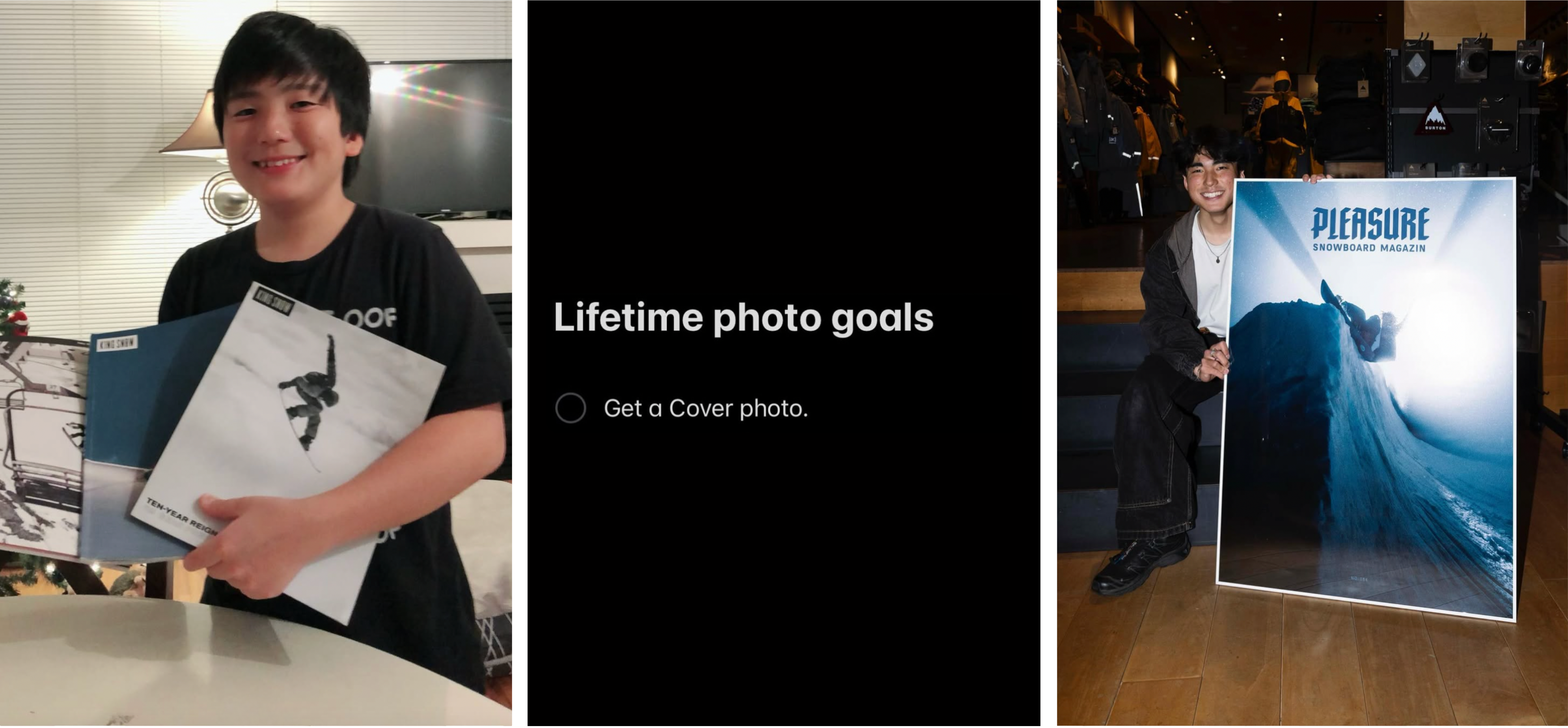
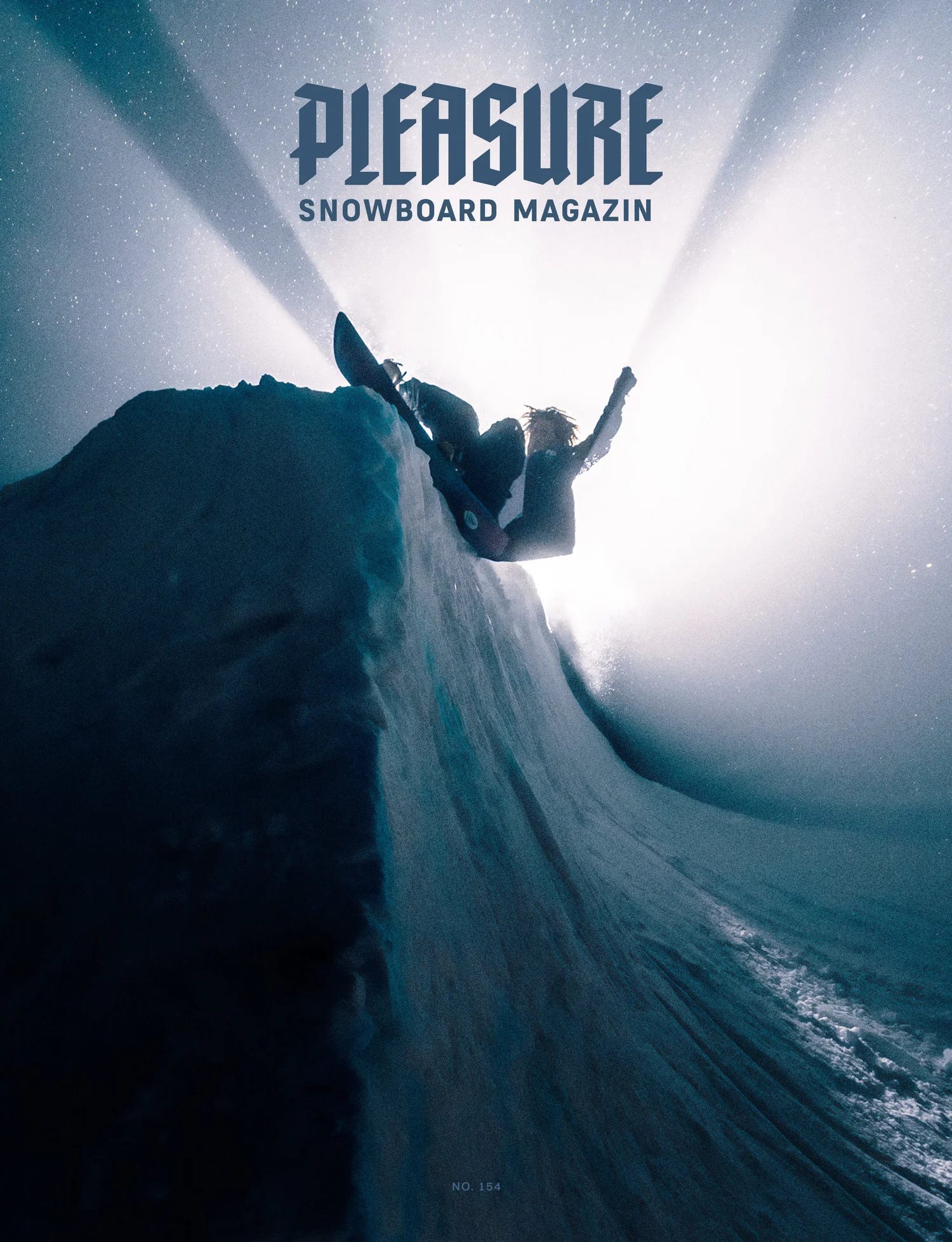
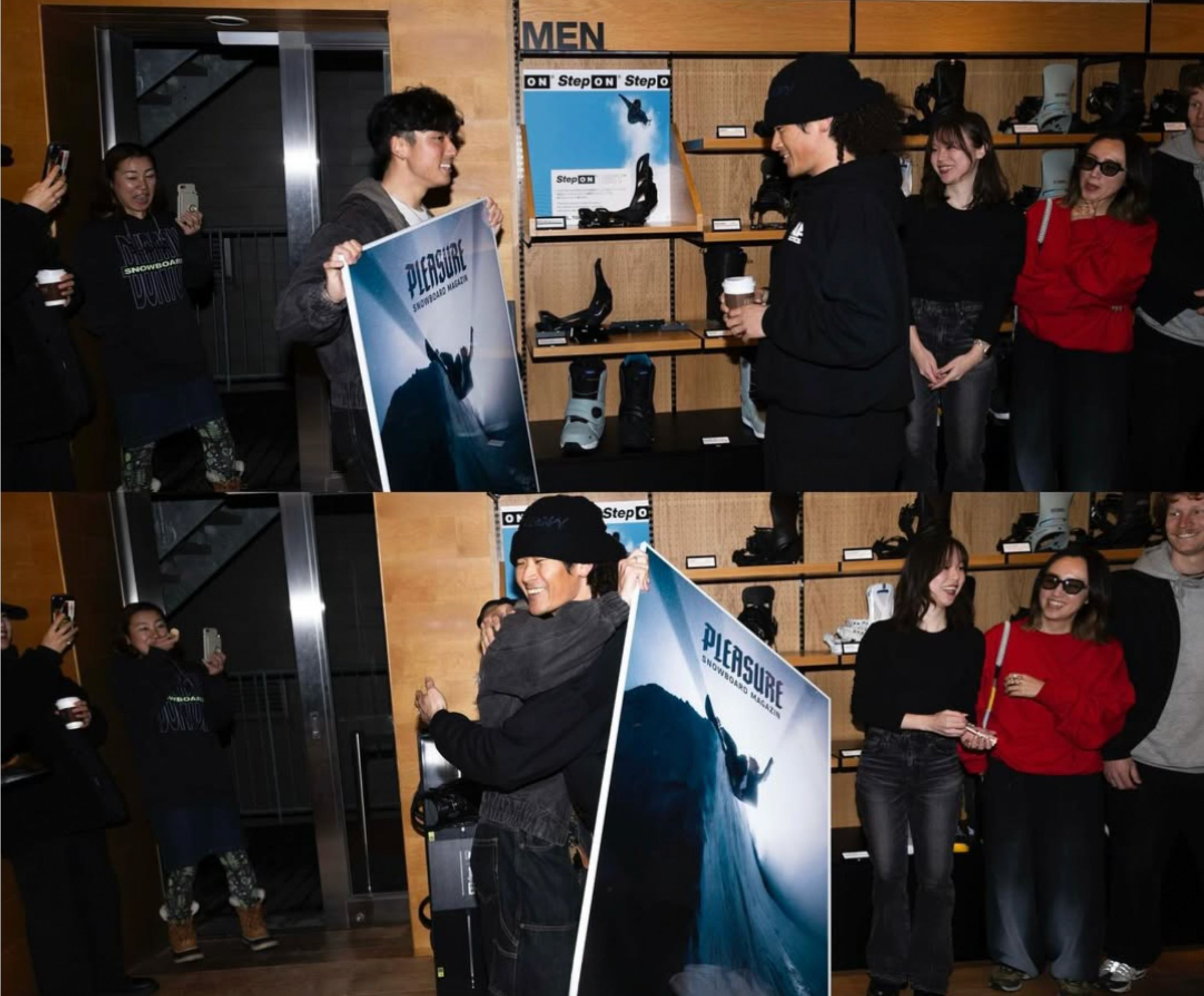
His first magazine cover was for Pleasure Magazine, Issue 154. He boarded a helicopter for the first time, bound for Baldface Lodge—a legendary private snowboard destination that had long been on his list and is notoriously difficult to access. Very little went according to plan.
“We had one session at night where everyone was riding one quarter pipe. It started to get really foggy and rainy. Most people backed out.”
Isami stayed. His two strobe lights were stationed opposite one another to illuminate the entire quarter pipe—until one fell down the mountain. With only one strobe remaining, he repositioned it behind his subject, Olympic athlete Raibu Katayama (@raibukatayama), and pivoted.
“It just created a really unique backlight effect where he was a silhouette and his arms created a beam like a rock star…that is my favourite photo to this day that I’ve taken, and I was so happy to see it on my first cover.”
With one dream checked off, Isami had all the proof he needed that the other was well within reach.
Earning the Trust of Team USA
At 21, Isami became one of the youngest photographers ever credentialed in Olympic history, attending the 2026 Milano Cortina Games as an official photographer for the U.S. Ski and Snowboard Team.
The trust Team USA placed in him didn’t come out of nowhere. It was built through years of consistent work—and shaped in part by the team photographers who came before him, like Michael Dawson (@mikedawsy), whose creative approach had already set the standard for what the team valued.
“I think off the bat, they saw my work ethic,” Isami explains. “They told me, ‘We want you to be creative, and present the best work you possibly can.’ Having that trust made it a lot easier to perform.”
Still, he knew he’d need to prove himself. When asked about the pressure of standing at the edge of Olympic courses surrounded by world-class photographers, he admits he felt an unexpected sense of reassurance: “In a funny way, I was looking at everyone else taking the same photos, and I thought, ‘…The team told me to do something completely different. What can I do from here?’”
Those other photographers weren’t competition; their photos and his existed in entirely different categories.
In Closing
In snowboarding, the fastest way down the mountain is the groomed run—the wide, well-packed trail that’s been carved out and travelled by everyone before you. It’s predictable, it’s efficient, and it’ll get you to the bottom.
Isami has never taken the groomed run.
He opts for first tracks: veering off the beaten path to carve through untouched snow, making creative choices that nobody else has quite made before him. At every stage of his career, he’s trusted that instinct.
Most creatives can point to the person who first put a camera in their hands—or told them their work was worth sharing. For Isami, that person was his mother, and losing her reframed everything he thought he was working toward.
“I just want to make her proud,” he says. “I still want to create the best art that I possibly can, teach people, host workshops, and spread the joy that I get from photography and snowboarding.”
For him, success was never really about the credentials or the covers. It was about creating in a way that would make him, and the people who believed in him, proud—including the woman who handed him the camera in the first place. And if his story tells us anything, it’s that the clearest path to fulfilment is the one you carve out yourself.
Steal a page from Isami’s process:
On staying creatively restless
Ask Isami about his style and he'll tell you he's still figuring it out—which isn't false modesty so much as it is a philosophy.
"One of my biggest joys in photography is that my style changes over time. I always love experimenting and learning different ways to take photos," he says.
On finding inspiration
Isami pulls from portrait photography, surf photography, stop-motion animation, and album covers. One of his earliest techniques to gain traction was multi-exposure photography—an idea that came to him while listening to AT.LONG.LAST.ASAP by A$AP Rocky, whose album art features layered double exposures.
Must-haves for shoot day
"Whenever I used to do any sort of other medium of art—painting, drawing, stop motion—I'd always be listening to music. It got me into a flow state."
Music has always been central to Isami’s process. With the exception of backcountry shoots—where avalanche risk is high and communication is essential—he opts for headphones over the sounds of the slopes. He’ll typically bring at least three pairs to a shoot: AirPods Pro for noise cancellation, AirPods Max for over-ear listening, a wired backup—and a speaker in case everything else fails.
On goal setting
Part of what drives Isami is a habit he developed early: "I always write down the goals I have. Not particularly to fully achieve them, but more or less to just steer me in a specific direction."
Isami made intentional choices to immerse himself in the world of snowboarding, and it paid off. Consider how you might strategically position yourself in your own niche.
On getting started
Isami shot professionally for four years on a Canon Rebel T7 with a kit lens before ever upgrading his equipment. For everything he's achieved, his advice on gear remains simple: "I feel like people overestimate how much gear they need. It can just be a point-and-shoot camera. That's how I started.”
Follow Isami on Instagram (@isami_kiyooka) and keep up with his work over at Airhole Facemasks (@airholefacemasks) by Endeavor Design Inc.